




The Jewish calendar tends to get most of its attention around the big-name holidays — Rosh Hashanah, Yom Kippur, Sukkot, Passover. But between two of those, Yom Kippur and Sukkot, there's a short and often overlooked stretch of days that has its own quiet character: not quite a holiday, not ordinary time either, but a bridge between two very different kinds of experience.
The pivot from repentance to joy
Yom Kippur is the most solemn day of the Jewish year — a full day of fasting, prayer, and introspection, ending with the final long blast of the shofar as the fast concludes. Sukkot, coming just five days later, is called zman simchateinu, the time of our rejoicing. It's a week of eating outdoors under branches, welcoming symbolic guests, and celebrating with family.
The pivot between these two — from the most serious day of the year to one of the most joyful — doesn't happen instantly. It happens across these thirteen days.
Building the sukkah
One of the most beautiful traditions in this window is that families begin building their sukkah the night Yom Kippur ends. Still tired from a full day of fasting, many observant households will symbolically hammer at least the first nail or set the first board that same evening. The reason: to move directly from one mitzvah (commandment) into the next, without pause in between.
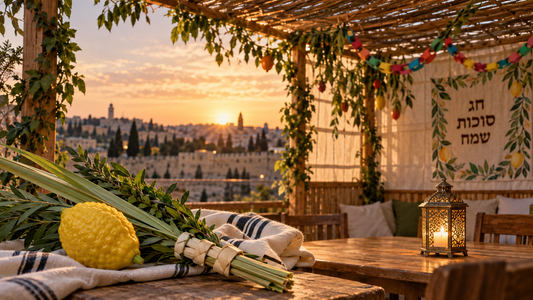
Over the following days, the sukkah takes shape in yards, on balconies, on rooftops. Neighborhoods across Israel and Jewish communities worldwide fill with the sound of construction — wooden panels, bamboo mats, string lights, and hanging decorations going up.
Choosing the four species
The other central preparation of these days is selecting the Arba Minim, the four species used during Sukkot prayers: the lulav (palm branch), etrog (citron), hadassim (myrtle), and aravot (willow). In Israel especially, outdoor markets set up entire sections dedicated to selling these, and families spend real time inspecting etrogim — checking their shape, their skin, their small crown at the top — to find one that meets the traditional requirements of beauty and perfection.
It's a specific kind of pre-holiday activity that has no parallel in most Western traditions: a slow, careful hunt for four small plants that will be held together for a week of morning prayers.
The emotional shift
Beyond the practical preparations, these days carry a deliberate emotional arc. After Yom Kippur's atonement, tradition holds that the slate has been wiped clean — the year ahead is genuinely new. Sukkot, then, is the celebration of that renewal. The days between are when a household transitions from having said "I'm sorry" to preparing to say "thank you."
Many people describe these days as feeling unusually light. The heaviness of the High Holidays has lifted, but the routines of ordinary life haven't fully resumed. There's a small window of anticipation — quieter than a holiday, more purposeful than a regular week.
Practical customs in these days
- Not fasting or mourning: traditional Jewish law considers these days a period of joy in themselves, so fasting is generally avoided and mourning customs are lightened.
- Hospitality: many families use this window to invite others to their upcoming Sukkot meals, especially those without a sukkah of their own.
- Preparing meals and decorations: Sukkot is a week of hosting, so cooking, table planning, and decorating the sukkah with children's artwork, hanging fruits, and posters becomes a family activity.
A bridge worth noticing
Most Jewish holidays get written about individually. This short window doesn't have a name most people recognize, and it's easy to miss entirely. But it has a real shape: a transition from the year's deepest introspection into its most joyful celebration, marked by hammering nails, choosing citrons, and quietly turning toward what's next.
If you're in these days now, you're standing in one of the quieter, more purposeful stretches on the Jewish calendar. Chag Sameach in advance.
Tags:
Related articles
-
Aug 09 2026
How Many Times Is the Shofar Blown on Rosh Hashanah?
-
Jul 29 2026

