





If you've just received your first shofar and aren't sure how to actually get a sound out of it, you're in good company — nearly everyone struggles the first few tries. It's a real skill, closer to playing a brass instrument like a trumpet than it might look, but almost anyone can learn it with a bit of practice.
It's a real, functional instrument
However decorative or ornate your shofar is — hand-painted, engraved, or left natural — it's still a genuine, playable ram's horn or antelope horn shofar underneath. The artwork sits on top of a fully functional instrument, not a replica. If you're able to blow a steady note through it, it will sound.
The basic technique
Sounding a shofar works on the same principle as a trumpet or bugle — it's your lips, not your breath alone, that create the sound.
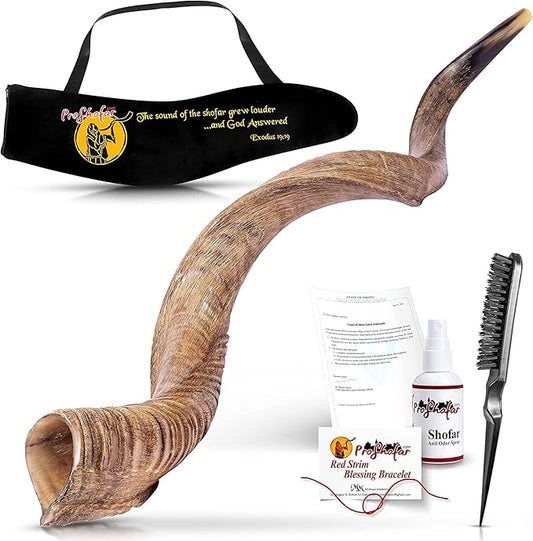
- Moisten your lips slightly and press them gently against the mouthpiece (the narrow end of the horn).
- Purse your lips together as if you're about to say the letter "M," leaving a very small opening in the center.
- Blow a steady stream of air through that small opening while keeping your lips loosely closed — the goal is to make your lips vibrate or "buzz" as the air passes through, similar to blowing a raspberry, just more controlled.
- Adjust the tightness of your lips and the angle of the horn slightly until you find the point where the buzzing catches and turns into a clear tone.
It's not about blowing harder — in fact, blowing too forcefully before your lips find the right buzz usually just produces air noise with no tone at all. The sound comes from the vibration, not the force of the breath.
Common first-time mistakes
Lips too loose: produces a breathy, airy sound with no real note. Tighten your lips slightly and try again.
Lips too tight: often produces no sound at all, or a very strained, thin one. Relax slightly and find a middle point.
Blowing too hard, too soon: wastes breath without producing a tone. Start softer and build up once you've found the buzz.
Wrong mouthpiece pressure: pressing too hard against your lips can restrict the vibration. A light, even seal usually works better than force.
Does the size or type of shofar matter?
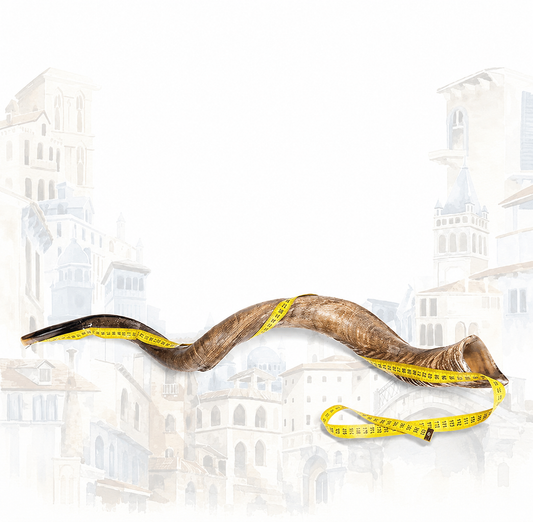
Yes, somewhat. Shorter, smaller shofars (including compact oryx or decorative pieces) can be slightly easier for a first-timer to get a sound from, simply because there's less horn to fill with air and tone. Longer kudu shofars generally require a bit more breath control but reward you with a deeper, richer sound once you've got the technique down. If you're just starting out, don't be discouraged if a longer horn takes a few extra tries — it's a matter of practice, not the instrument being faulty.
Practice makes it easier
Like any wind instrument, the muscles involved (your lips, mostly) improve with repetition. Many people find that after a handful of tries spread across a few sessions, the sound becomes much easier and more consistent to produce. It's genuinely common for someone to get little more than air on their first attempt and a full, clear blast by their fifth or sixth.
If you're still working on it, don't hesitate to reach out to us directly — we're always happy to help troubleshoot.
Looking for your first shofar, or a second one to add to your collection? Browse our full shofar collection.
Tags:
Previous
The Story Behind the Seder Plate: What Each Section Means
Next
How to Measure a Shofar: The Right Way to Get the Size You Want
Related articles






-
Aug 09 2026