



If you’ve ever sat in synagogue on Rosh Hashanah and wondered why the shofar keeps sounding — long blasts, short blasts, broken blasts, again and again — you’re not alone. There is a real structure behind it. Here is how many times the shofar is blown, the three distinct sounds, and what the sequence means.
The short answer: 100 blasts
By long-standing custom, the shofar is sounded 100 times on each day of Rosh Hashanah. The core obligation established in Jewish law is smaller — a minimum of 30 blasts fulfills the basic requirement to hear the shofar — but the widespread tradition is to extend this to 100 blasts across the service. Some communities sound 101, and the number carries layers of meaning that sages have connected to themes of the day.
Because Rosh Hashanah spans two days, the shofar is heard on both. The one exception is when the first day falls on Shabbat, in which case the blowing is done only on the second day.
The three sounds of the shofar
All of those blasts are built from just three basic sounds. Once you can recognize them, the whole sequence makes sense.
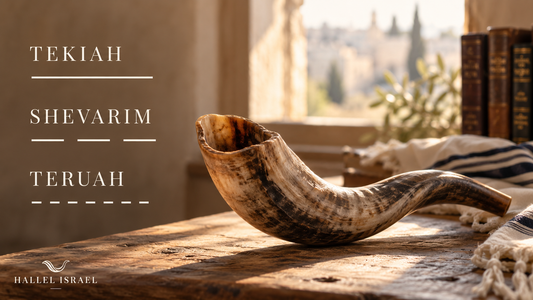
Tekiah — one long blast
A single, unbroken, sustained note. The tekiah opens and closes each set, framing the other sounds like bookends. It is often described as the sound of a coronation — a clear, steady call announcing the King.
Shevarim — three medium, broken blasts
Three connected wavering notes (the word shevarim comes from the Hebrew for “broken”). Together they last about as long as one tekiah. Many describe this as the sound of sighing or moaning — a heart that is stirred.
Teruah — nine short, staccato blasts
A rapid burst of nine short notes in quick succession, again roughly equal in total length to a tekiah. The teruah is often described as sobbing or weeping — an urgent, alarm-like cry meant to wake the soul.
How the blasts are combined
The three sounds are grouped into short sequences, always beginning and ending with a tekiah. The traditional combinations are:
- Tekiah – Shevarim-Teruah – Tekiah
- Tekiah – Shevarim – Tekiah
- Tekiah – Teruah – Tekiah
These sequences are repeated through different parts of the service, and the counts add up to the full custom of 100. The final blast of the day is often a single extended tekiah held for as long as the blower can sustain it — the tekiah gedolah, or “great tekiah.”
Why the sounds matter
The progression from a whole, clear note (tekiah) to broken and sobbing sounds (shevarim and teruah) and back to a whole note again is widely understood as a spiritual arc: a call to attention, a stirring and breaking of the heart in reflection, and a return to wholeness. The shofar’s cry is meant to awaken, to move, and to draw a person toward renewal at the start of the new year.
It’s worth noting that customs vary between communities — the exact counts, the order within the service, and certain details differ across traditions. What stays constant everywhere is the three core sounds and the central mitzvah of hearing the shofar.
Hearing it for yourself
Whether you’re preparing to blow the shofar for your community or simply want to understand what you’re hearing, knowing the three sounds transforms the experience. If you’d like to learn to produce them, see our guide on how to blow a shofar, and if you’re choosing an instrument, our shofar buyer’s guide and guide on how to measure a shofar will help you find the right one.
Browse our handcrafted shofars from Israel →
Tags:
Previous
How to Measure a Shofar: The Right Way to Get the Size You Want
Next
What Is a Shofar? Meaning, History, and Why It's Blown on Rosh Hashanah
Related articles

-
Jul 29 2026

