


The shofar is one of the oldest and most recognizable symbols in Jewish tradition — a natural horn whose piercing call has summoned the Jewish people for thousands of years. But what exactly is it, where does it come from, and why is it blown? Here is a clear introduction to the shofar, its history, and its meaning.
What is a shofar?
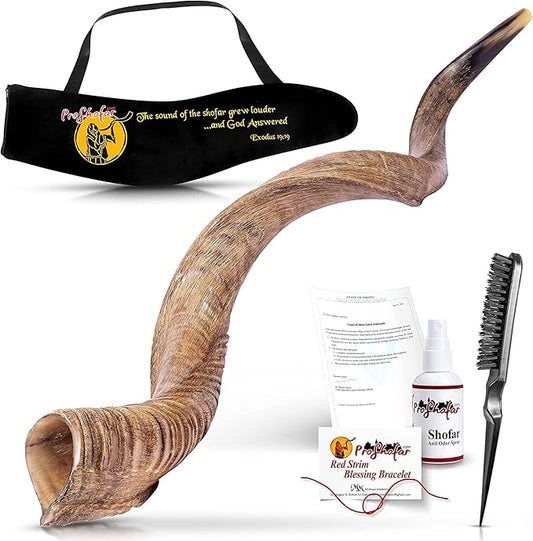
A shofar is a wind instrument made from the horn of a kosher animal — most commonly a ram, but also the kudu, oryx, and other permitted animals. The horn is hollowed, cleaned, and shaped so it can be sounded by blowing into the narrow end, producing a raw, powerful tone unlike any modern instrument. Unlike a trumpet or brass horn, a shofar has no mouthpiece mechanism, valves, or reeds; the sound comes entirely from the player’s breath and lips against the natural horn.
Because each shofar is made from a real animal horn, no two are exactly alike. Color, curve, length, and tone vary from one to the next, which is part of what makes each one distinctive.
A brief history of the shofar
The shofar is among the most ancient instruments still in use today, appearing throughout the Hebrew Bible. It sounded at Mount Sinai when the Torah was given, its blast growing louder and louder. It was used to announce the new moon and festivals, to gather the people, and famously in the account of the walls of Jericho. Across biblical history the shofar served as a call to attention — for war, for assembly, for coronation, and for sacred moments.
That ancient role as a summons is exactly what carries into how the shofar is used today: a sound that stops people, gathers them, and calls them to something higher.
Why is the shofar blown on Rosh Hashanah?
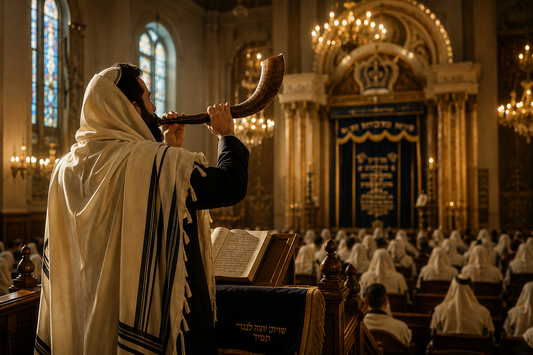
The central mitzvah (commandment) of Rosh Hashanah, the Jewish New Year, is to hear the shofar. The Torah itself calls the day “a day of sounding” the horn. Over the centuries, sages have offered many layers of meaning for why we blow it. Among the most well-known:
- Coronation of the King. Just as trumpets are sounded at a king’s coronation, the shofar proclaims God as King of the universe at the start of the new year.
- A call to repentance. The shofar’s cry is like a spiritual alarm clock, awakening the soul to reflect, take stock, and return to a better path during the Ten Days of Repentance.
- The binding of Isaac. Because the shofar is traditionally a ram’s horn, it recalls the ram offered in place of Isaac in the biblical account — evoking faith, mercy, and covenant.
- The voice of the prophets. Its blast echoes the prophets who called the people to correct their ways and act justly.
The shofar is also sounded at the close of Yom Kippur, marking the end of the fast with a single long blast — a moment many describe as one of the most powerful in the Jewish year.
Why a ram’s horn and not another instrument?
The question is an old one, and the traditional answer is layered. On the simplest level, it is because the Torah commands a natural horn rather than a manufactured instrument. Beyond that, the ram’s horn specifically connects the day to the binding of Isaac and the ram that took his place. And the shofar’s sound itself — unpolished, wordless, almost a cry — is meant to express what words cannot: a call from the depths of the soul.
The sound of the shofar
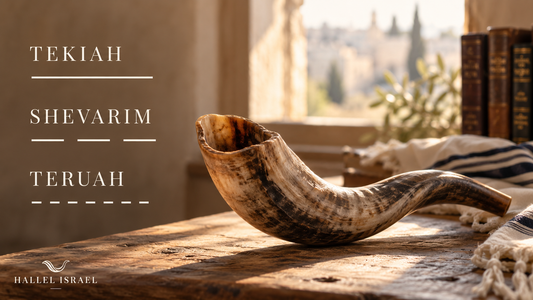
When sounded, the shofar produces three traditional notes — a long blast (tekiah), a broken three-part blast (shevarim), and a rapid staccato blast (teruah) — combined into sequences repeated through the Rosh Hashanah service. If you’d like to understand how these fit together, see our guide on how many times the shofar is blown on Rosh Hashanah.
Choosing and caring for a shofar
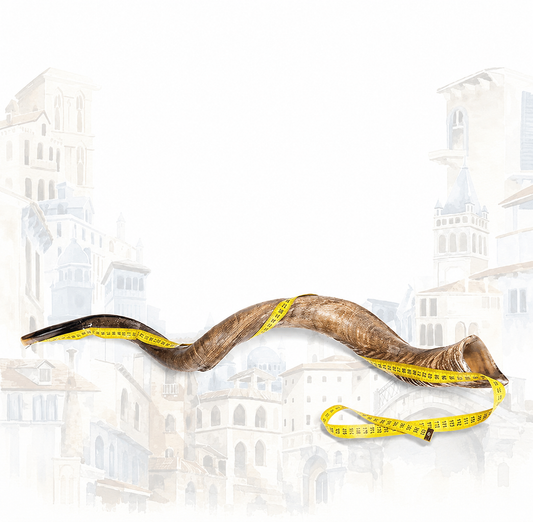
Shofars come in several types and sizes, each with its own character — from the classic ram’s horn to the long, dramatic spiral of a Yemenite kudu. If you’re considering one of your own, these guides will help:
Every Hallel Israel shofar is handcrafted in Israel from natural horn, carrying the same ancient sound that has called out for thousands of years.
Browse our shofar collection →
Tags:
Previous
How Many Times Is the Shofar Blown on Rosh Hashanah?
Next
The 3 Shofar Sounds Explained: Tekiah, Shevarim, and Teruah
Related articles

-
Aug 09 2026
How Many Times Is the Shofar Blown on Rosh Hashanah?
-
Jul 29 2026

