

If you've never bought a shofar before, the number of options can be surprising: different horn types, different finishes, different sizes, hand-painted or engraved versions, and prices that range from under $100 to several hundred dollars. This guide walks through what actually matters so you can pick the right one — whether it's for your first Rosh Hashanah, a synagogue, or a gift.
Ram's horn vs. kudu vs. oryx: what's the difference?
Ram's horn is the traditional, most commonly used shofar, and the one most people picture. It tends to be shorter and more tightly curved, with a sharper, more piercing sound.
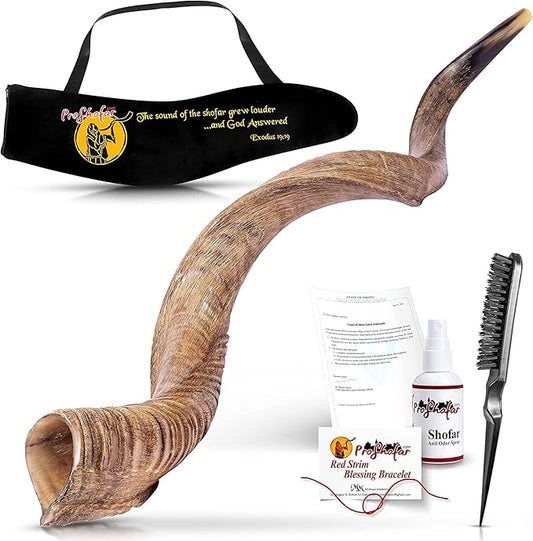
Kudu horn comes from the greater kudu antelope, native to southern and eastern Africa. It's the longest and most dramatically curved of the common shofar horns, often 24 inches or more, and produces a deeper, richer tone. Yemenite Jewish communities have traditionally favored the kudu shofar, and it's become popular more broadly for its striking shape and sound.
Oryx horn is straighter and more slender — a "wand" shape rather than a dramatic curve. It's often used for smaller, more decorative or collector-focused pieces rather than as a primary ceremonial instrument, though it's every bit a real, functional shofar.
Natural, half-polished, or polished: does finish matter?
This is mostly about appearance and grip, not sound quality. Natural finish keeps the horn's raw, matte texture. Polished finish is smoothed and glossy, which some people find easier to hold and more visually striking, but it doesn't meaningfully change the tone. Half-polished splits the difference — often polished at the bell and natural toward the mouthpiece, or vice versa.
What size should I get?
Longer shofars generally produce deeper, more resonant tones, while shorter ones are easier to handle and control, especially for a first-time user or a younger person learning to blow one. If this is your first shofar, a mid-range size (roughly 20–28 inches) is usually the easiest starting point — long enough for a satisfying tone, short enough to control comfortably.
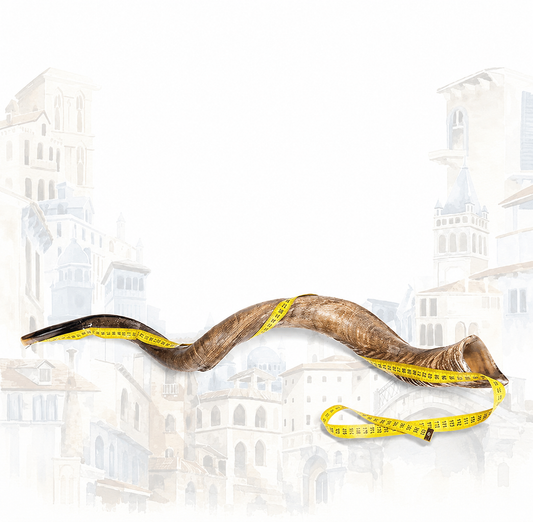
Keep in mind that shofars are measured along the curve, not end to end, so a horn can look more compact in person than its stated length suggests. Our guide on how to measure a shofar explains exactly how sizing works so you know what to expect.
Engraved, hand-painted, or plain?
Purely a matter of taste and budget — the engraving or painting doesn't affect how the shofar sounds. Hand-engraved pieces (Hebrew text, the Lion of Judah, Jerusalem's skyline) tend to cost more because of the additional hours of skilled work. Hand-painted shofars use color rather than engraving, which some people prefer for a bolder, more decorative look. A plain, unadorned shofar is just as kosher and functional as an elaborately decorated one — the decoration is about meaning and beauty, not validity.
A few practical notes
- Because shofars are made from natural horn, no two are ever perfectly identical — small variations in color, shape, and curve are normal and expected, not a defect.
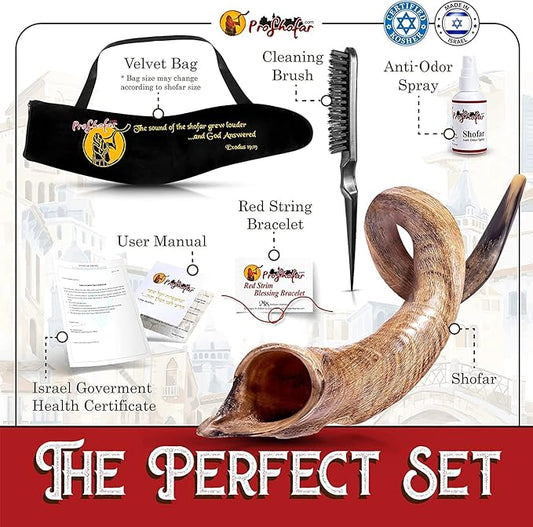
- A carrying bag is worth having if you'll be transporting the shofar to synagogue or storing it between High Holiday seasons — it protects the horn from scuffs and scratches.
- If you're buying for a child or someone new to blowing a shofar, a shorter, natural-finish horn is usually the easiest to start with.
Learn more about the shofar
- What Is a Shofar? Meaning, History & Why It's Blown
- How Many Times Is the Shofar Blown on Rosh Hashanah?
- How to Blow a Shofar: A Beginner's Guide
- How to Care for and Clean Your Shofar
Browse our full range of shofars, including engraved pieces, if you're ready to find the right one.
Tags:
Related articles


-
Aug 09 2026
How Many Times Is the Shofar Blown on Rosh Hashanah?
-
Jul 29 2026

