





If you're shopping for a shofar for the first time — or looking to add a second, different one to a small collection — the choice between a ram's horn, a kudu, and an oryx shofar is the first real decision you'll face. All three are traditional, all three are kosher, and all three are made from the natural horn of the animal they're named after. But they sound different, look different, and carry different histories.
Here's what actually distinguishes them, and how to decide which one is right for you.
Ram's Horn Shofar: The Classic Choice
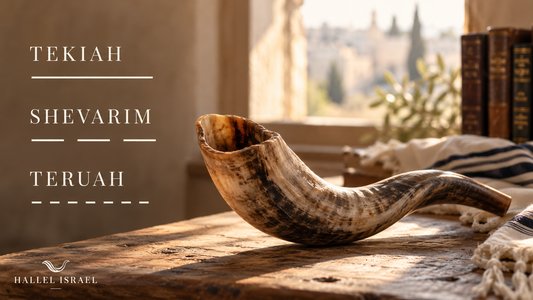
The ram's horn shofar is the one most people picture when they hear the word "shofar" — relatively short, curved into a tight arc, and the specific type prescribed by traditional Jewish law for the Rosh Hashanah service.
What it looks like: Compact, typically 10 to 20 inches, with a strong curve. Colors range from cream to dark brown, often with natural marbling and ridges from the ram's growth.
What it sounds like: Bright, sharp, piercing. It cuts through the air rather than filling a room — which is exactly why it's the traditional choice for synagogue use, where a clear, unmistakable call matters.
Best for: Someone who wants the most traditional, halachically-preferred shofar. First-time buyers. Synagogue use. Rosh Hashanah observance.
Trade-offs: Because it's shorter and more compact, it can be slightly easier to sound for beginners — but the tone is less deep and resonant than the larger horns.
Explore our ram's horn shofar collection.
Kudu Shofar: The Yemenite Tradition
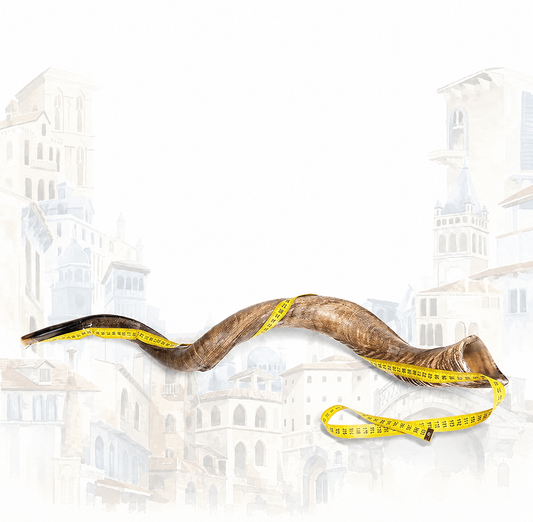
The kudu shofar comes from the greater kudu, a large African antelope, and is closely associated with the Yemenite Jewish tradition. It's dramatically longer than a ram's horn — sometimes reaching 40 inches or more — with a distinctive spiral twist.
What it looks like: Long, spiraled, and striking. The natural twist of the kudu horn is visually unmistakable, and larger kudu shofars have real presence as objects.
What it sounds like: Deep, resonant, and haunting. Where a ram's horn cuts, a kudu shofar fills — a lower, longer tone that carries a very different emotional weight. Many people describe it as more "ancient" or "soulful" sounding.
Best for: Someone drawn to the Yemenite or Sephardic tradition. Collectors. Anyone who wants a shofar with visual and sonic drama. A powerful second shofar to complement a traditional ram's horn.
Trade-offs: Longer horns require slightly more breath control to sound well. Not the halachically-preferred type for Ashkenazi Rosh Hashanah service (though widely accepted in Sephardic and Yemenite communities). Larger sizes are harder to store and transport.
Browse our kudu shofar collection.
Oryx Shofar: The Rarest of the Three
The oryx shofar comes from the gemsbok oryx, another African antelope. It's the least common of the three types, and it has a shape unlike either of the others: long, slender, and nearly straight rather than curved or spiraled.
What it looks like: Long and wand-like, closer to a straight staff than a horn. Typically dark, sometimes almost black, with subtle ridging along its length.
What it sounds like: Full and clear, sitting somewhere between the brightness of a ram's horn and the depth of a kudu. Because of the straight bore, oryx shofars often sound remarkably clean once you find the tone.
Best for: Collectors. Someone who already owns a ram's horn or kudu and wants something visually distinct. A statement piece.
Trade-offs: Less common in traditional synagogue use. The straight shape, while visually striking, makes it look less like the "classic" shofar most people expect. Availability is more limited than the other two types.
See our oryx shofar collection.
Which One Should You Choose?
If it's your first shofar, the ram's horn is almost always the right answer. It's traditional, it's what synagogue services use, it's easier to store, and it's the shape most family members and guests will recognize immediately.
If you're building a small collection or already own a ram's horn, a kudu is the natural second piece — the size and sound contrast is dramatic, and it's a genuinely different experience to hold and blow. Larger kudu shofars also serve as beautiful display objects when not in use.
If you want something visually unusual, or you've already owned both, an oryx is the rarer choice — a real statement piece for a collector.
A Note on Sound and Practice
Whichever type you choose, sounding a shofar is a genuine skill — it takes practice. If you're new to it, our beginner's guide to blowing the shofar walks through the technique. And if you're deciding between sizes within a type, our guide to shofar measurement covers what different lengths mean in practice.
All of our shofars are hand-selected and finished in Israel — you can explore the full shofar collection here.
Tags:
Related articles





-
Aug 09 2026