

Anointing with oil is one of the oldest ritual practices described in the Bible, showing up across both Hebrew scripture and the New Testament in contexts ranging from consecrating priests and kings to preparing the dead for burial. It's a practice with a long, layered history — and one that's still meaningful to many people today.
Anointing in the Hebrew Bible
The Torah describes a specific holy anointing oil, prepared according to a precise formula of olive oil blended with spices including myrrh, cinnamon, and cassia. This oil was used to consecrate the Tabernacle, its vessels, and the priests who served in it — setting them apart for sacred use. Anointing was also used to mark the selection of kings; both Saul and David were anointed with oil as part of becoming king of Israel.
Frankincense and myrrh specifically
Frankincense and myrrh, both aromatic resins harvested from trees native to the Arabian Peninsula and parts of Africa, carry their own long history independent of anointing oil specifically. Both were valuable trade goods in the ancient world, used in incense, medicine, and ritual across multiple cultures. In the New Testament, frankincense and myrrh are famously among the gifts brought to the infant Jesus, alongside gold — gifts fit, symbolically, for a king, a priest, and eventually a sacrifice.
Anointing in later Jewish and Christian practice
Beyond the specific biblical formula, anointing with oil became a broader ritual gesture across Jewish and Christian practice — used in blessings, in some healing rituals, and in various ceremonial contexts depending on tradition and denomination. The exact practices vary widely; some communities maintain quite formal anointing rituals, while for others it's a more personal or symbolic gesture.
How people use anointing oil today
Modern anointing oils, including blends like frankincense and myrrh, are generally used in personal prayer, blessing, or reflection rather than in the specific priestly or royal contexts described in the Bible. For many people, using an anointing oil is less about replicating an ancient ritual exactly and more about connecting to that long tradition in a personal way — as part of prayer, a blessing over a home or a person, or simply as a meaningful object tied to scripture.
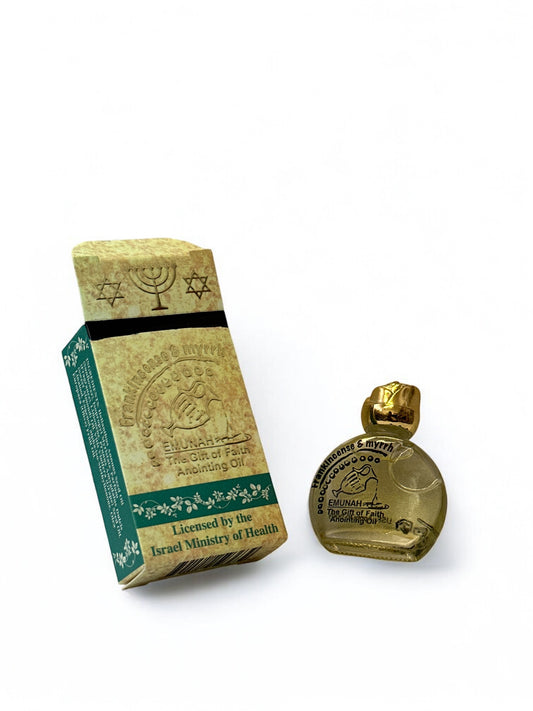
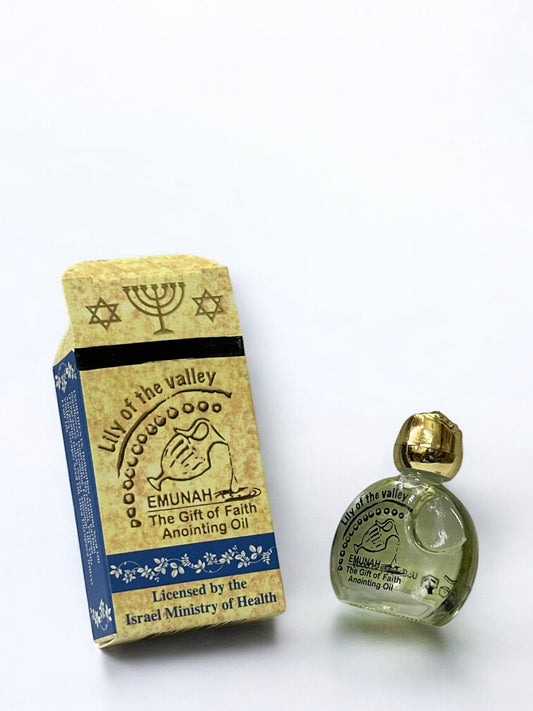
Our EMUNAH anointing oil blends frankincense and myrrh in a formula licensed by Israel's Ministry of Health, along with other scent options inspired by biblical ingredients.
Tags:
Previous
The Meaning Behind the Hamsa Hand
Next
Kiddush Cup Traditions: Why We Bless Wine on Shabbat
Related articles

-
Aug 09 2026
How Many Times Is the Shofar Blown on Rosh Hashanah?

-
Jul 29 2026

