
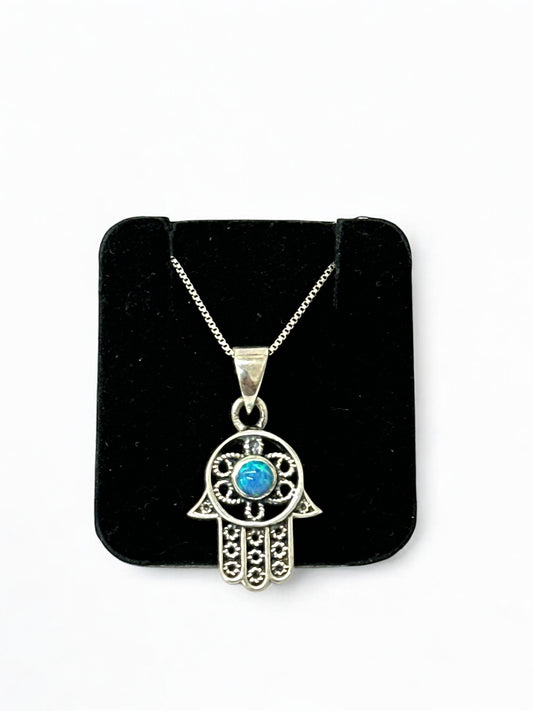
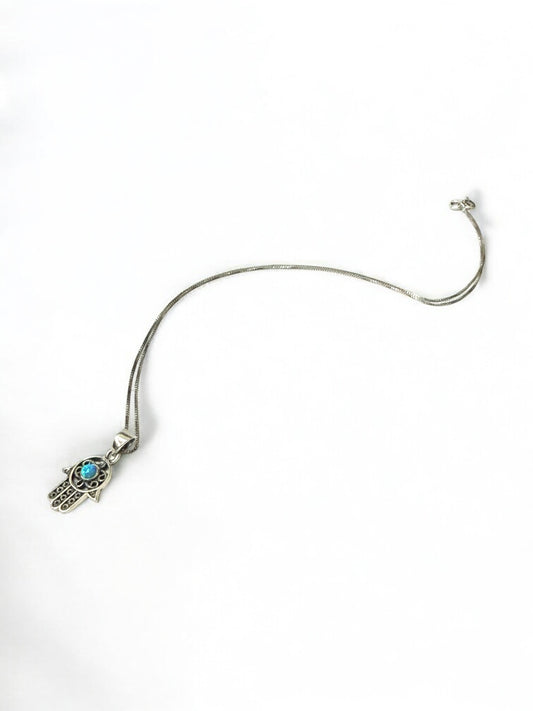
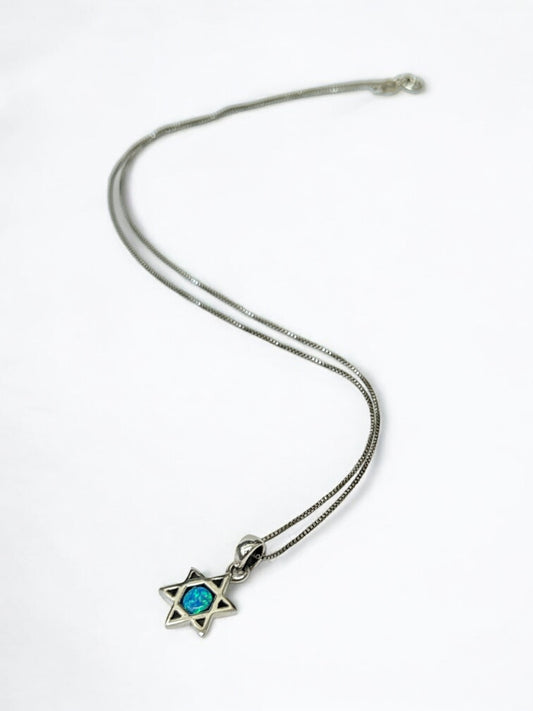


The hamsa — a hand-shaped symbol, usually shown palm-forward with an eye in the center — is one of the most widely recognized protective symbols in the Middle East and North Africa, worn and displayed across multiple cultures and religions.
Where the symbol comes from
The hamsa's exact origin isn't tied to a single tradition — it predates and crosses several religions, which is part of why it's worn so broadly today. In Jewish tradition, it's sometimes called the "Hand of Miriam," referencing Moses's sister. In Islamic tradition, it's often called the "Hand of Fatima," after the daughter of the Prophet Muhammad. The name "hamsa" itself comes from the Arabic word for "five," referring to the five fingers of the hand.
Because it's woven through Jewish, Muslim, and broader Middle Eastern folk traditions alike, the hamsa has become a genuinely shared symbol — worn by people across religious lines as a mark of protection and cultural connection to the region, rather than belonging exclusively to one faith.
What it's meant to do
The hamsa is traditionally understood as a protective symbol, meant to ward off the "evil eye" — a concept found across many Mediterranean, Middle Eastern, and South Asian cultures, referring to harm believed to come from envious or ill-wishing glances. The eye sometimes depicted in the center of the hamsa is a direct reference to this idea, symbolizing vigilance against that kind of harm.
Beyond protection, the hamsa is also associated more generally with good fortune, happiness, and blessing — which is part of why it's such a popular design for everyday jewelry rather than something reserved only for ceremonial use.
How it's worn today
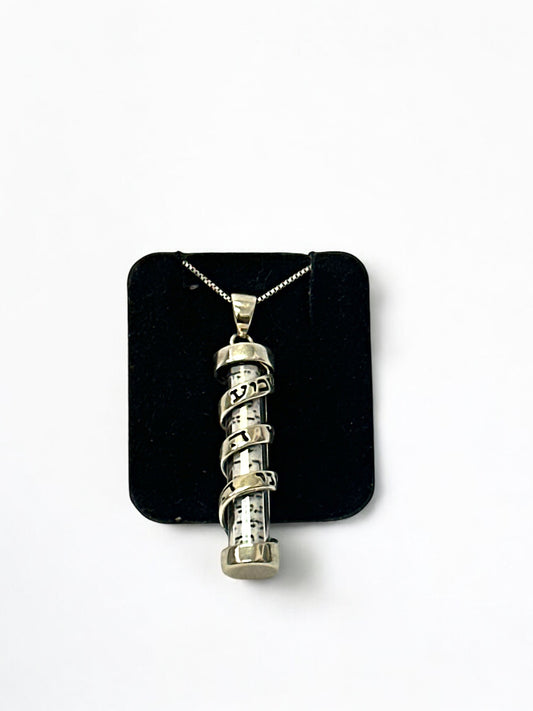
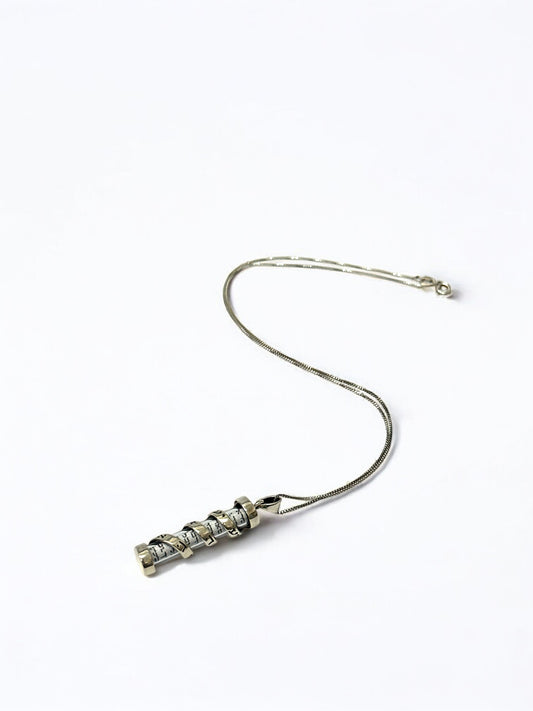
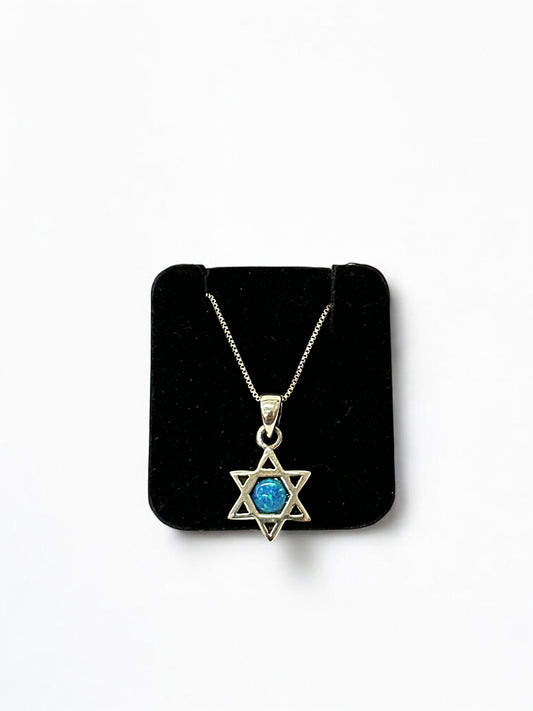
The hamsa appears constantly in jewelry — pendants, bracelets, earrings — as well as in home decor, wall art, and even tattoos. It's often paired with other protective or meaningful symbols, like a blue eye bead, a natural stone, or Hebrew or Arabic text, depending on the wearer's tradition and taste.
Because the symbol carries broad, shared meaning rather than being tied to strict religious requirements, it's a piece that works as a gift across a wide range of recipients — whether someone is looking for a meaningful piece tied to Middle Eastern heritage, a protective symbol, or simply a striking design.
See our hamsa pieces, including designs set with natural opal stone.
Tags:
Previous
What Is a Mezuzah and How Do You Install One?
Next
Anointing Oil in the Bible: History and Modern Use
Related articles

-
Aug 09 2026
How Many Times Is the Shofar Blown on Rosh Hashanah?
-
Jul 29 2026

